Vineyard Erosion Control: Supplies and Methods
Vineyard erosion control keeps soil, fertilizer and sediment on your ranch. The most effective plan starts before planting, then adds seasonal tools like cover crops, runoff diversion and straw wattles with stakes. A&J Vineyard Supply stocks wattles and stakes from late July through November and special-orders silt fence, jute netting and coconut blankets.
What is Erosion Control in a Vineyard?
Erosion control is the practice of preventing or managing soil loss caused by wind and water. In a vineyard, it protects vine health, productivity and environmental compliance.
Surface runoff is one of the main ways fertilizer, sediment and pesticide residues leave a vineyard site. Over time, erosion wears down soil quality and can cut vine performance and yield. A good erosion plan protects your ranch now and keeps it productive for the long haul.
When Should You Install Erosion Control in a Vineyard?
Install erosion control before you plant vines. The best protection starts in the planning and layout phase, then carries through every season.
Several factors set your erosion risk:
- Rainfall intensity and frequency
- Soil type and structure
- Slope length and steepness
- Vineyard layout and row orientation
- Management practices
Row direction matters. Planting rows across the slope instead of up and down can reduce erosion by as much as 50%. [FLAG 4] During layout, a soil conservation professional or engineer can help you spot problem areas and choose the right fixes.
What are the Seasonal and Temporary Erosion Control Methods?
Even a well-designed vineyard needs erosion control all year, especially during heavy rain. Vineyards commonly use three temporary methods:
- Cover crops, planted in late summer or early fall, absorb rainfall and protect soil through winter
- Runoff diversion directs excess water around vineyard blocks
- Runoff reduction slows water movement so sediment settles before it leaves the site
Many growers put these measures in right after harvest, when vines are less sensitive to ground disturbance. Our post-harvest maintenance guide covers what else belongs on that checklist.
Which Erosion Control Supplies Work Best in Vineyards?
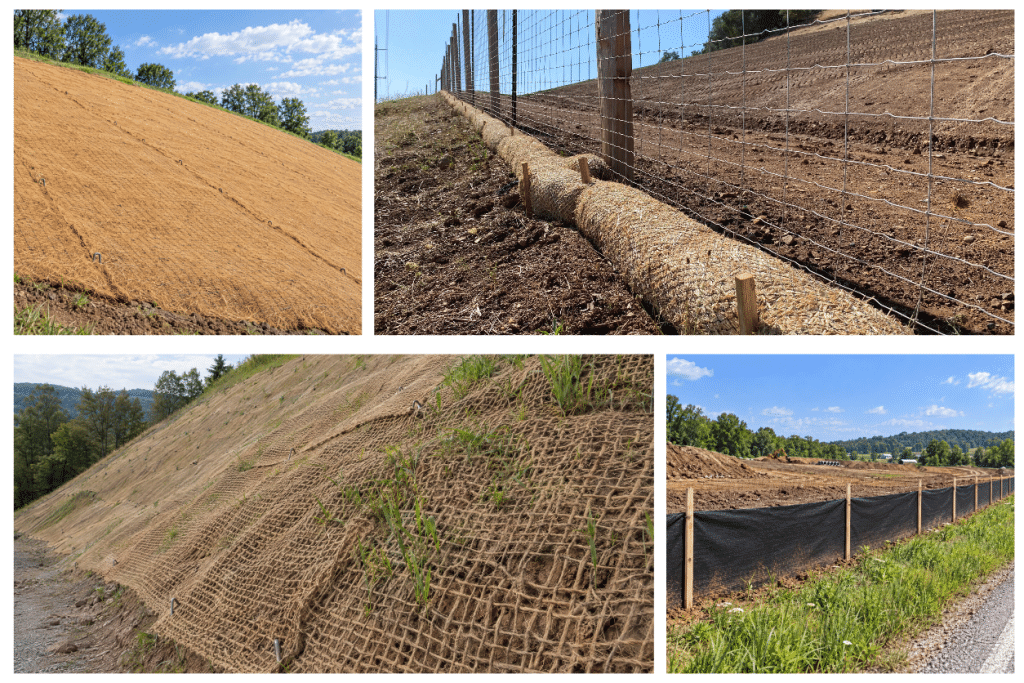
A&J Vineyard Supply carries straw wattles and wattle stakes. Silt fence, jute netting and coconut blankets are available by special order.
What are Straw Wattles and How Do They Work?
Straw wattles are cylindrical tubes filled with compressed straw. You install them along contours or at the base of slopes to slow runoff, retain sediment and reduce soil loss. Wattles are among the most widely used erosion control products in Napa Valley and other vineyard regions. They can also create temporary ponding that lets sediment and seed settle, which improves soil conditions downstream.
Our straw wattles are:
- Filled with certified noxious weed-free rice straw
- Wrapped in biodegradable, photodegradable burlap
- Standard size: 9″ diameter x 25′ length
- About 40 lbs per wattle
- Rated for an 18 to 24 month functional lifespan
We sell wattles individually or by the pallet (12 per pallet).
What are Wattle Stakes For?
Wattle stakes secure straw wattles in place and keep them from shifting during storms. Our typical stakes are:
- Made from fir, redwood, cedar or pine
- Cut to 1″ x 1″ x 18″, with one pointed end and one flat end
- Sold in bundles of 50
- About 0.3 lbs per stake
We generally stock wattles and stakes from late July through November.
What Other Erosion Control Products Can You Order?
We special-order silt fence, jute netting and coconut blankets. Growers typically use these in higher-risk areas or where regulatory requirements apply.
How Do Straw Wattles and Special-Order Products Compare?
Straw wattles and stakes work as a pair on contours and slope bases. Special-order products handle higher-risk ground.
| Product | What It Does | Where It Goes | How You Buy It |
|---|---|---|---|
| Straw Wattles | Slow runoff, retain sediment, reduce soil loss | Along contours or at the base of slopes | Individually or by the pallet (12 per pallet); stocked late July through November |
| Wattle Stakes | Secure wattles and prevent displacement in storms | With straw wattles | Bundles of 50; stocked late July through November |
| Silt Fence, Jute Netting, Coconut Blankets | Added protection for higher-risk ground | Higher-risk areas or where regulations apply | Special order |
Where Can You Get Help Choosing Vineyard Erosion Control Supplies?
Call A&J Vineyard Supply at 707-963-5354 or request a custom quote. Our team helps you pick the right mix of supplies. You can also browse seasonal items online.
Give us a call — we’ll get you sorted.
Frequently Asked Questions
How many straw wattles come on a pallet?
A&J Vineyard Supply sells straw wattles individually or by the pallet, with 12 wattles per pallet. Each standard wattle measures 9 inches in diameter by 25 feet long and weighs about 40 pounds. Call 707-963-5354 and we’ll help you figure out how many your slope needs.
How long do vineyard straw wattles last?
A&J’s straw wattles have a functional lifespan of 18 to 24 months. They’re filled with certified noxious weed-free rice straw and wrapped in biodegradable, photodegradable burlap. Give us a call to talk through when to replace yours and what to order before the next rainy season.
What holds straw wattles in place on a slope?
Wooden wattle stakes secure straw wattles and prevent displacement during storm events. A&J’s stakes come in bundles of 50, cut to 1 inch by 1 inch by 18 inches, with one pointed end and one flat end. They’re made from fir, redwood, cedar or pine.
When should vineyards install erosion control?
Install erosion control before you plant vines, during planning and layout. Then manage it all year, especially in heavy rain. Many temporary measures go in right after harvest, when vines are less sensitive to ground disturbance. Cover crops go in during late summer or early fall to protect soil through winter.
What other erosion control products can I order from A&J?
A&J Vineyard Supply special-orders silt fence, jute netting and coconut blankets. Growers typically use these in higher-risk areas or where regulatory requirements apply. Call 707-963-5354 and our team will help you choose the right products for your slope, soil type and seasonal needs.